Is Ceramic Coating Worth It on a Used Car?
Is ceramic coating worth the money on a used car in Scotland? What it really costs, how long it lasts on a daily driver, and when to skip it.
In this guide
- 01The short answer
- 02What a ceramic coating actually is
- 03What a ceramic coating does not do
- 04How long a coating lasts on a daily driver
- 05Why Scottish winters change the maths
- 06What it costs to coat a used car in Scotland
- 07Why used cars cost more to coat than new ones
- 08Wax or ceramic on a used car?
- 09What you have to do afterwards
- 10Is it worth it for your car?
Every used car ad in Scotland seems to end the same way. Full service history, two keys, recently ceramic coated.
Sometimes that means a proper job with the paint corrected first and a coating that will still be working in four winters. Sometimes it means a bloke sprayed something on at a hand car wash for £40 last April. Same three words on the advert.
Which is the real question underneath "is ceramic coating worth it on a used car". Worth it compared to what, on which car, kept for how long.
The diagnosis
- Worth it on a used car in decent nick that you are keeping three to five years and parking outside.
- Most of the cost on a used car is the machine polishing first, not the coating itself.
- Expect three to five years from a professional coating, one to two from a DIY kit.
- It will not stop stone chips or scratches, and the car still needs washed properly.
- Not worth it on a low-value car, a short-term keeper, or if brush washes are staying in your life.
The short answer
On a used car in Scotland, ceramic coating is usually worth the money when all three of these hold:
The car is in good condition, or you are happy to pay to get the paint corrected first. You are keeping it another three years or more. And it lives outside, which for most of us it does.
Get all three and the cost stops looking like a luxury and starts looking like a few hundred pounds spread across years of quicker washes, better paint and a car that photographs properly when you eventually sell it.
Miss one of them and the sums get shakier. Miss two and it is money with nowhere useful to go.
What a ceramic coating actually is
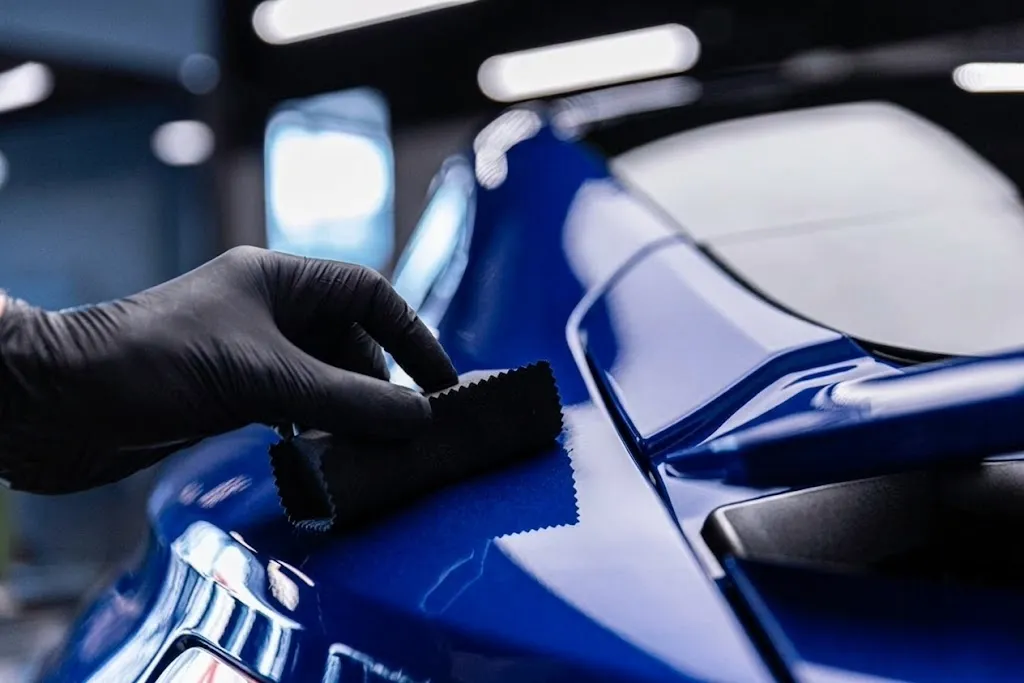
A liquid polymer, silicon dioxide based, that chemically bonds to the clear coat and cures into a hard, glass-like layer on top of the paint.
That word BONDS is the whole difference. Wax sits on the surface and comes off in the rain, the shampoo and the sunshine, usually within a couple of months. A coating becomes part of the paint system, which is why it gets measured in years rather than washes.
What you get out of it is a surface that water beads and sheets off rather than sitting on, that resists UV, bird lime, traffic film and the harsh chemicals in cheap car washes far better than wax ever did, and that holds a deeper gloss for as long as it lasts.
What a ceramic coating does not do
This is the part the marketing skips, and it is the part that decides whether you end up happy.
It does not make paint scratch-proof. The 9H hardness figure gets quoted constantly and it does not mean what people think. A coating adds real resistance to light marring, but drag a gritty sponge across a panel and you will still mark it. Grit is harder than the coating.
It does not stop stone chips. Nothing sprayed on will. If chip resistance on the bonnet and front wings is what you actually want, that is paint protection film, which is a completely different product at completely different money. Already looking at a peppered bonnet rather than planning ahead? Our paint chip repair for existing bodywork damage improves what is already there; it is not a protective layer.
It does not remove anything. Swirl marks, oxidation, water etching, wash marks from the last owner. A coating goes over the top of all of it and locks it in place for the next few years. That is why polishing comes first.
It is not maintenance-free. It makes washing easier and safer. It does not make washing optional.
How long a coating lasts on a daily driver
Ignore the packaging. Here is what actually happens on cars that get driven.
Shop-bought consumer kits give somewhere around one to two years of meaningful protection. Professionally applied coatings commonly run three to five years, and the top-end systems are rated at seven or more under favourable conditions. Real-world daily drivers parked outside land in the two to five year band, provided they get washed properly and topped up now and then.
So the honest line for a used car in Scotland that lives on a driveway is roughly three to five years from a professional coating, one to two from a DIY bottle.
That range is not marketing hedging. It moves on things you control. How well the paint was prepped. How many miles the car does. Whether it sits outside all winter. Whether it goes through a brush wash on a Saturday. The same coating on two identical cars can be doing great work at year four on one and giving up at year two on the other, and the difference is almost always how the car gets washed.
Why Scottish winters change the maths
Coating a car in a dry climate is mostly about looks. Here it is not.
The gritters go out across West Lothian and the Lothians and the roads stay wet with brine for weeks at a time. That salt gets into the arches, the sills, the lower doors and the number plate recess, and where the paint is already chipped or scuffed it gets underneath and starts working. Road salt accelerates corrosion, and left sitting on a panel long enough it will stain and etch the paint itself.
What a coating changes is how well that mess sticks. A slick, chemically resistant surface gives salt, brine and winter road film far less to bond to, so a lot of it comes off in the prewash instead of needing scrubbed off in January in the dark. Less scrubbing means fewer new marks going into the paint, which is the benefit that never makes the sales pitch and is genuinely the best one.
What it does not do is make salt harmless. A coated car that never sees a hose between November and March is still a car with salt packed into its arches. The coating buys you an easier job, not a free pass.
Then spring turns up and swaps one problem for another. Sap, pollen, insects, and bird droppings, which are the sneaky one. Left on warm paint for an afternoon they will etch a ring into the clear coat, and a coating slows that down rather than preventing it.
What it costs to coat a used car in Scotland
Prices across Scotland are all over the place, and it confuses people for a good reason. A 2025 Scottish price guide has professional coating packages running from under £300 at basic drive-through valets up to £1,750 and beyond at specialist studios. Some Fife studios list used car coating packages from around £575 to £825 for a small car, with full transformation jobs at £1,375 and self-healing seven-year coatings around £1,750.
They are not really quoting the same job. The number moves with how much paint correction is in the package, which coating is going on, and how big the car is.
Here is where our own pricing sits for a used car.
Ceramic coating a used car with VDS
from£200
- Time
- 1–2 days
- Best for
- Paint already in good condition, or freshly corrected. Includes a machine polish, glass, wheels and trim.
- Time
- ~4–8 hours
- Best for
- Sorting the paint on its own, before you decide on long-term protection.
from£300
- Time
- ~8–12 hours
- Best for
- The realistic starting point for most used cars. Single-stage polish, 60–80% defect removal. Add a coating on the same booking from £100 instead of £200.
from£450
- Time
- 1–2 days
- Best for
- Heavily swirled or neglected paint. Multi-stage correction, 90–95%+ defect removal. Add a coating on the same booking from £100 instead of £200.
| Service | Price | Time on site | Best for |
|---|---|---|---|
| Ceramic Coating & Protection | from£200 | 1–2 days | Paint already in good condition, or freshly corrected. Includes a machine polish, glass, wheels and trim. |
| Machine Polishing & Paint Correction | from£150 | ~4–8 hours | Sorting the paint on its own, before you decide on long-term protection. |
| Enhancement Detail | from£300 | ~8–12 hours | The realistic starting point for most used cars. Single-stage polish, 60–80% defect removal. Add a coating on the same booking from £100 instead of £200. |
| Paint Correction Detail | from£450 | 1–2 days | Heavily swirled or neglected paint. Multi-stage correction, 90–95%+ defect removal. Add a coating on the same booking from £100 instead of £200. |
Prices shown are for a small car and rise with vehicle size. Everything is quoted after seeing the paint, because condition moves the number more than anything else does.
For most used cars the enhancement detail is the sensible answer rather than a bare coating. You are getting the swirls out and the coating on in the same visit, which is the combination that actually makes a used car look better than it did when you bought it.
The coating is priced as an add-on rather than baked into the package, and it is cheaper that way. On its own it starts at £200, and most of that is the prep: decontamination, tar and iron removal, clay bar, machine polish. The enhancement detail has already done all of it. Booked together, the coating starts at £100 for the two-year tier, with longer-life options priced up from there. Booked six months later, you pay for that prep a second time.
Why used cars cost more to coat than new ones
People find this backwards. Surely a new car, worth more, costs more to protect.
It does not, and the reason is that you are not really paying for the coating. You are paying for the hours in front of it.
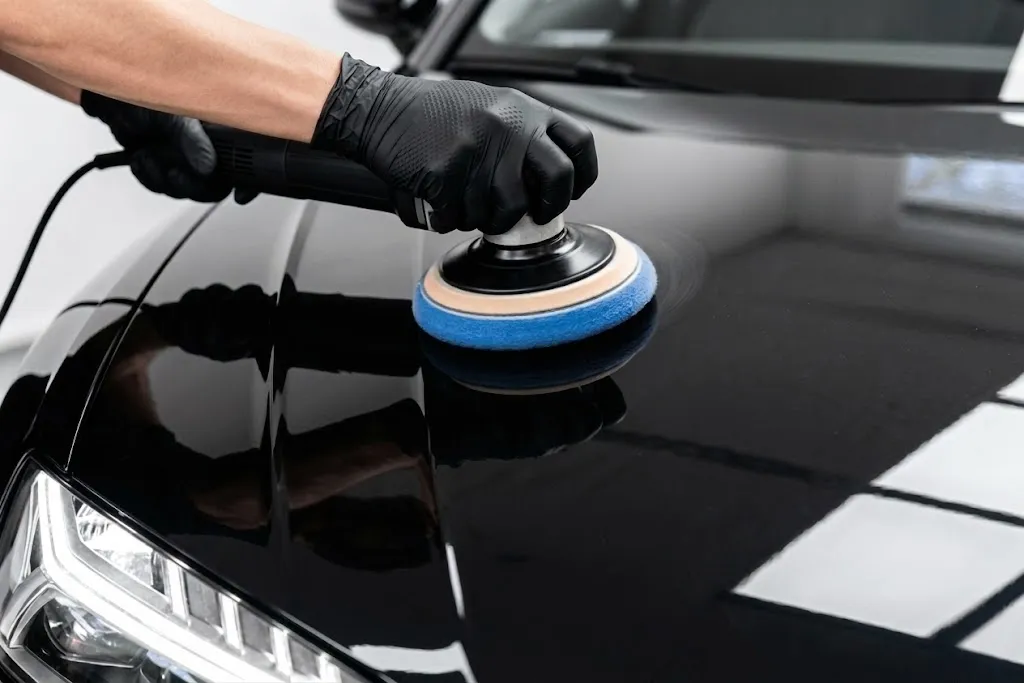
A used car needs the full sequence. Decontamination wash, tar remover, iron fallout remover bleeding purple down the arches, clay bar to lift whatever is still bonded to the paint. Then machine polishing to level the clear coat around three years of somebody else's wash technique. Then a panel wipe to strip the polishing oils so the coating has clean paint to bond to. Only after all of that does anything get coated.
A new car can often skip most of it. One light enhancement stage, sometimes not even that, and it is ready. That is why a new car protection detail starts at £210 while a used car that needs proper correction starts higher.
More defects means more polishing stages. A bigger car means more panels. Both mean more hours, and hours are what you are buying.
Which also explains why nobody honest quotes a used car over the phone. Two cars of the same model and year can be an afternoon apart in work depending on how the last owner washed them.
Wax or ceramic on a used car?
Wax is not the wrong answer. It is the wrong answer for some cars.
Wax and ceramic coating compared on a used car
- How long it lasts
- Wax or sealant
- Weeks to a couple of months, then it needs redone
- Ceramic coating
- Two to five years on a daily driver, longer on a cared-for car
- Protection level
- Wax or sealant
- Basic cover against UV and light contamination
- Ceramic coating
- Strong resistance to UV, chemicals, bird lime and light marring
- Water behaviour
- Wax or sealant
- Beads nicely at first, drops off fairly quickly
- Ceramic coating
- Tight beading and sheeting that holds up for years
- Upfront cost
- Wax or sealant
- Low, and you can do it yourself on a Sunday
- Ceramic coating
- Higher upfront, cheaper per year if you keep the car
- Best suited to
- Wax or sealant
- Low-value cars, short-term keepers, people who enjoy doing it
- Ceramic coating
- Daily drivers living outside where time and long-term protection matter
| Wax or sealant | Ceramic coating | |
|---|---|---|
| How long it lasts | Weeks to a couple of months, then it needs redone | Two to five years on a daily driver, longer on a cared-for car |
| Protection level | Basic cover against UV and light contamination | Strong resistance to UV, chemicals, bird lime and light marring |
| Water behaviour | Beads nicely at first, drops off fairly quickly | Tight beading and sheeting that holds up for years |
| Upfront cost | Low, and you can do it yourself on a Sunday | Higher upfront, cheaper per year if you keep the car |
| Best suited to | Low-value cars, short-term keepers, people who enjoy doing it | Daily drivers living outside where time and long-term protection matter |
If you are keeping the car another year and a half and you quite like a Sunday morning with a pot of wax, do that. You will get a lovely finish on darker paint for very little money.
If the car is staying with you, sits outside, and you would rather spend forty minutes washing it than half a day waxing it four times a year, the coating wins on both time and money over its life.
What you have to do afterwards
A coating changes what maintenance looks like. It does not delete it.
Leave it alone for the first week or two. The coating is still curing. No washing, no automatic car washes, and keep it out of heavy rain where you can.
Then wash it every two to four weeks. pH-neutral shampoo, a proper mitt, two buckets. No brushes, no automatic washes, and definitely nothing with the word "traffic film remover" on it in strong concentrations.
Get bird droppings and sap off quickly. Ideally within hours. A coating slows etching down, it does not stop it.
Refresh it now and again. A decontamination shampoo occasionally, and a ceramic topper or spray sealant when the beading starts looking lazy. That is what stretches three years into five.
None of that is a big ask. The point is that regular safe washing becomes ENOUGH. You are not re-waxing every couple of months and you are not scrubbing at bonded road film, because most of it comes off in the prewash.
Is it worth it for your car?
Run your own car through this rather than the average one.
Ceramic coating on a used car: the honest verdict
Worth it if
- The paint is in reasonable condition, or you will pay to correct it first
- You are keeping the car another three to five years or more
- It lives outside through Scottish winters, salt and all
- You care how it looks and want washing to get easier
- You will follow simple aftercare and stop using brush washes
Probably not if
- The car is old or low-value and the bill approaches what it is worth
- You are selling it or handing it back within a year or so
- You want a quick shine for photos rather than years of protection
- You are honest enough to admit the local brush wash is not going anywhere
- The paint needs bodywork rather than polishing
If you land on the right-hand side, a full valet and a decent wax will do far more for your money.
The last one on that right-hand list is worth saying plainly. If a car has been ignored for years and the paint is genuinely tired, sometimes the right advice is a full valet and a wax, and to put the difference towards something the car needs more.
Thinking about coating a used car?
VDS Auto Detailing provides mobile paint correction, machine polishing and ceramic coating across Livingston, West Lothian, West Edinburgh and the wider central belt, with Fife and the rest of the Lothians covered too. The full list is on our coverage areas page.
Every car gets looked at before anything is recommended. Sometimes that means a correction detail with a coating on top of it. Sometimes it means telling you the car does not need it, which is a conversation we would rather have before you have paid for something than after.
If you are still weighing up what the car needs at all, car wash, valet or detail walks through the differences properly.
View our detailing services or get in touch for a straight answer on your car.
Common questions
Frequently asked questions
7 answers
Is ceramic coating worth it on a used car?
How much does ceramic coating cost in Scotland?
How long does ceramic coating last on a daily driven car?
Does ceramic coating protect against road salt?
Do I need paint correction before a ceramic coating?
Is ceramic coating worth it on an old or low-value car?
Can I put a ceramic coating on myself?
Know someone who needs this?
Recommended treatment
Ceramic Coating & Protection
From £200
A bonded, hydrophobic layer that lasts years rather than weeks, applied over properly prepared paint.
View serviceContinue the diagnosis