Car Wash, Valet or Detail? What Does Your Car Need?
Not sure if your car needs a wash, valet or full detail? The differences explained, so you can pick the right service in West Lothian and central Scotland.
In this guide
Ask ten car-care businesses what a full valet is and you will get ten different answers.
One of them means half an hour, a pressure washer and a bottle of interior spray. Another means most of a day: iron fallout remover bleeding purple down the arches, clay bar, a machine polish, then a coating that has to cure overnight. Same two words on the price list. Wildly different jobs, and wildly different money.
There is no legal definition in the UK. Nobody has to call anything anything. So the package name is close to worthless as a way of comparing quotes.
The diagnosis
- A car wash removes everyday exterior dirt from a car already in decent condition.
- A valet cleans the interior and exterior thoroughly, inside and out.
- A deep clean tackles neglect: ground-in dirt, pet hair, tar and iron fallout.
- A detail improves and protects the paint through decontamination, polishing and coatings.
What actually decides the right service is the condition the car is in when it lands, the time and products going into it, and what you want at the end of it. Not the label.
Wash, valet or detail: quick comparison
Rough shape of it, before anyone books anything:
Car wash, valet and detailing compared
- Service
- Car wash
- What it is really for
- Keeping on top of a car that is already sound. Prewash, hand wash, wheels, safe drying.
- Best suited to
- Regularly maintained vehicles
- Service
- Valet
- What it is really for
- The full clean, inside and out. Vacuuming, plastics, glass, mats, shuts, a bit of protection on top.
- Best suited to
- Cars needing an overall refresh
- Service
- Deep clean
- What it is really for
- Undoing neglect rather than cleaning. Crevices, extraction, contamination that a valet will not shift.
- Best suited to
- Family, pet and work vehicles
- Service
- Detail
- What it is really for
- Improving the paint, not just cleaning it. Decontamination, machine polishing, coatings.
- Best suited to
- Dull or swirled paint, and used buys
| Service | What it is really for | Best suited to |
|---|---|---|
| Car wash | Keeping on top of a car that is already sound. Prewash, hand wash, wheels, safe drying. | Regularly maintained vehicles |
| Valet | The full clean, inside and out. Vacuuming, plastics, glass, mats, shuts, a bit of protection on top. | Cars needing an overall refresh |
| Deep clean | Undoing neglect rather than cleaning. Crevices, extraction, contamination that a valet will not shift. | Family, pet and work vehicles |
| Detail | Improving the paint, not just cleaning it. Decontamination, machine polishing, coatings. | Dull or swirled paint, and used buys |
Ceramic coating sits slightly outside that list, because it is a protection product rather than a tier of service. It can follow any of them, though applying one over paint that has not been corrected is usually a waste (more on that further down).
What a car wash includes
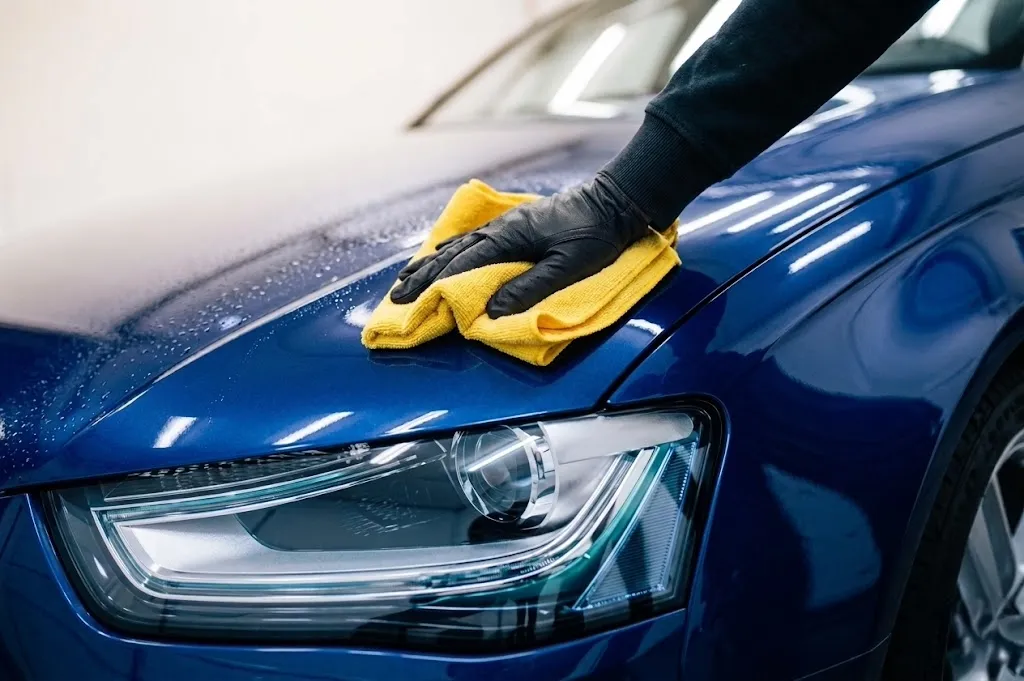
A maintenance wash is exactly what it sounds like. Loose dirt, road film, brake dust, whatever the last fortnight has thrown at the car, off the outside of it and away safely. Prewash or snow foam first to soften and lift the grit, then the contact wash, wheel faces, rinse, dried down with proper drying towels rather than whatever was in the boot.
That is a maintenance wash, and for a car in reasonable nick it is all that is needed. It does not include the interior beyond maybe a quick tidy, it will not extract stains, and it certainly will not polish anything.
Is hand washing always safer than an automatic car wash?
Not necessarily. A careful hand wash is usually the safest thing for your paintwork, but a bad one will do more damage than a well-maintained touchless machine ever would.
A hand wash done properly, with a prewash that does most of the work before anything touches the paint, clean mitts and two buckets with grit guards in them, is about as safe as washing a car gets. A hand wash done badly with one manky sponge and a bucket of cold water will hammer the finish, and plenty of hand washes are done exactly like that. Reused mitts and a rushed prewash drag grit across the clear coat, and that is where swirl marks come from.
"Automatic" also covers three fairly different machines. Old-style rotating brushes are the ones with the reputation, and some manufacturers still warn against them outright. Soft-cloth is gentler, but only ever as clean as the cars that went through before yours. Touchless never touches the panel at all, which removes the grit problem entirely, though it leans on much stronger chemistry to make up for it and that is its own trade-off on older sealants and trim.
None of it is risk-free, and the method matters far more than the label. A thorough prewash, clean equipment, a suitable shampoo, and as little contact with dirt as possible. Get as much grit off the panel as you can BEFORE anything solid touches it, and everything else is detail.
What a car valet includes
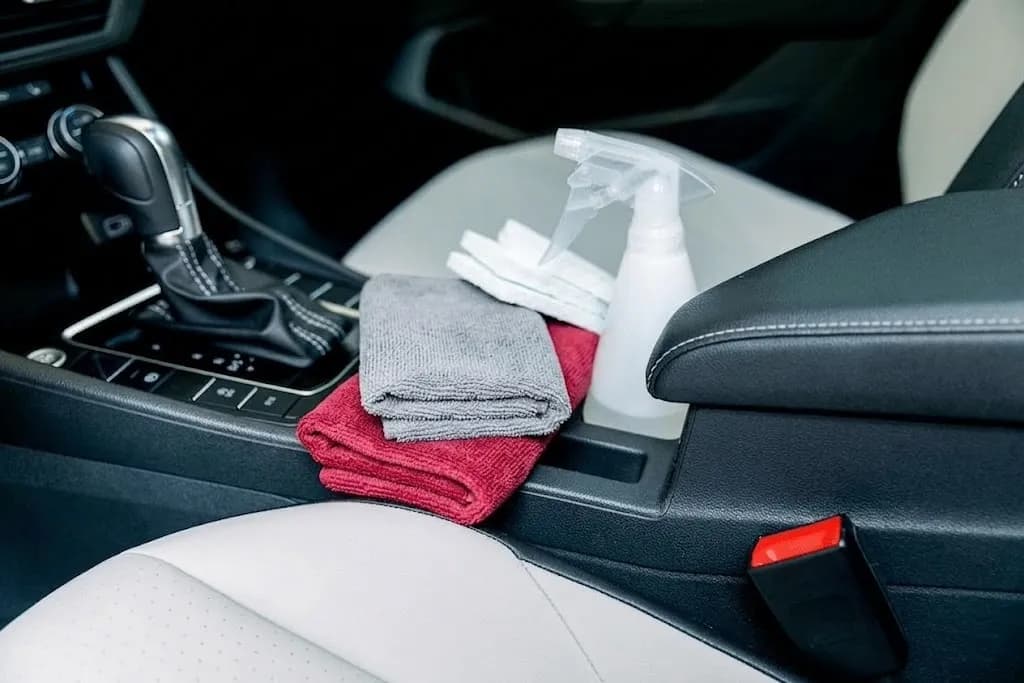
A full valet is the wash plus everything inside. Exterior washed, wheels and tyres done, seats and carpets and boot vacuumed out, mats cleaned, plastics wiped down and dressed, door shuts (which almost everyone skips), glass inside and out, then some basic protection on the paint before it goes back.
It is the right call for the vast majority of cars, honestly. Most vehicles do not need paint correction, they need somebody to spend three or four hours actually cleaning them properly for the first time since they were bought. The difference a valet makes to a car full of crumbs, dog hair and dried-in mud is bigger than the difference most people expect from a machine polish.
When a car needs a deep clean
Some cars are past the point where a valet will do. Pet hair woven into the carpets, spilled juice that went down the seat rail months ago, mud packed into the shuts, tar and iron sitting on the paint like sandpaper.
That is what a deep clean is for. More time and more intensive work: ours includes machine extraction of fabric seats, where cleaning solution is sprayed into the fabric and vacuumed back out. Specialist bits such as leather restoration or odour treatment can go on top. Those get assessed on the car rather than promised up front, because the right method depends on the material and what actually went wrong.
What car detailing actually means
Here is where the confusion really costs people money.
Detailing is not deep cleaning. It is not a very good valet. Washing a swirled bonnet gets you a clean swirled bonnet, because the defects are IN the clear coat, not on top of it. No shampoo on earth reaches them.
So a detail works on the paint itself. Chemical decontamination first, tar and iron fallout dissolved off, clay to lift whatever is still bonded, then machine polishing to level the clear coat around the defects and bring the gloss back. Paint depth readings taken along the way on anything that has been resprayed or looks suspect, because there is a finite amount of clear coat and you only get to remove it once. Then protection over the top, wax, sealant or a coating depending on what the owner wants out of it.
That sequence is the whole job. Skip the decontamination and the clay and you are just grinding grit into the paint with a polisher, which is a fast way to make an expensive mess.
What is paint decontamination?
Run your hand over a freshly washed panel with a thin plastic bag over it. If it feels like fine sandpaper instead of glass, that is bonded contamination and it did not come off in the wash.
Tar flicked up off resurfaced roads. Iron particles from brake dust that embed themselves in the paint and rust in place. Industrial fallout, tree sap, hard water spots. A tar remover dissolves the sticky stuff, an iron remover turns purple as it eats the metal particles (which is genuinely satisfying to watch on a white car), and clay picks off whatever is left standing proud of the surface.
Clay does not fix scratches. Its only job is to leave the paint smooth enough to polish or protect. Used dry or with poor lube it leaves fine marring of its own, so on darker colours it usually wants a polish afterwards anyway.
Is machine polishing the same as waxing?
Not remotely, and mixing the two up is the single most common misunderstanding in the trade.
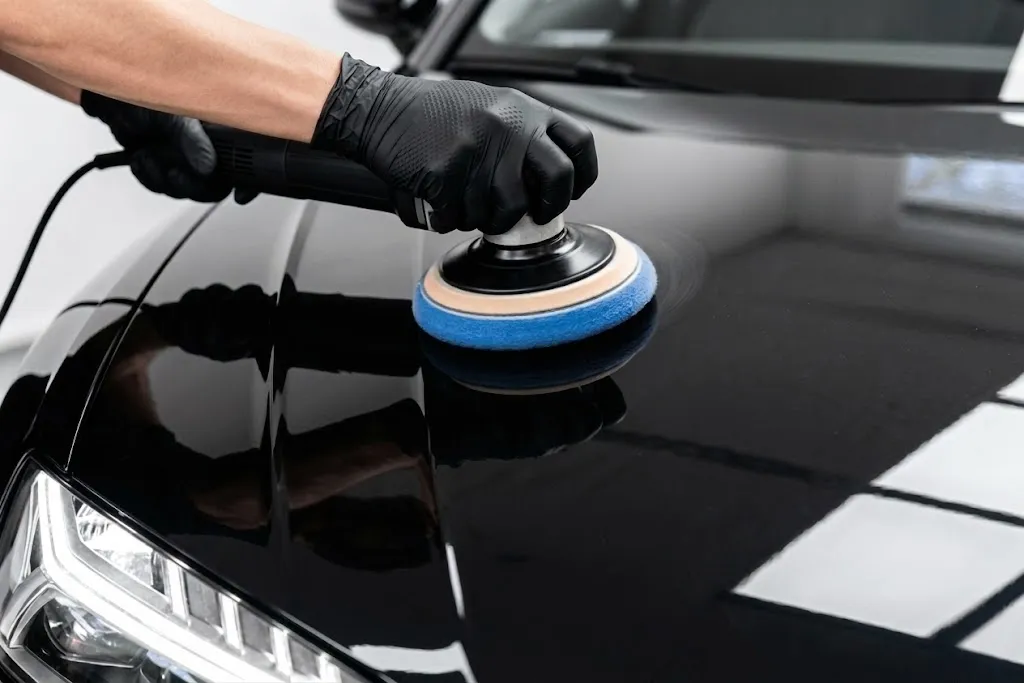
Machine polishing is abrasive. A pad and a compound on a machine, refining the clear coat itself, removing swirl marks, wash marks, fine scratches, oxidation, holograms from somebody else's rotary, light water etching. It works by taking a few microns of clear coat off the high points around a defect until the surface is level again. That is also why not every scratch comes out and why it would be daft to try. Catch a fingernail in it and it is too deep, that is a bodyshop job, and chasing it with a machine just thins the paint for no gain.
Wax goes on after all that. It adds gloss, beads water, makes dirt less keen to stick, and buys you a few weeks or months of protection. It removes nothing. A wax on swirled paint is a wet-look coat of gloss over a defect that is still there in the morning.
Does ceramic coating prevent scratches?
It does not. Coatings get sold on that idea constantly and it is not true.
What a ceramic coating does is bond a hard, hydrophobic layer to the paint that lasts years rather than weeks, sheds water properly, releases dirt easily and makes every wash after it quicker and safer. That last part is the real benefit and it gets undersold. Less scrubbing means fewer marks going back in.
What it will not do: stop stone chips, survive a trolley in the Livingston retail park car park, or protect the paint from somebody washing it badly with a filthy sponge. It is also not maintenance-free, whatever the 9H marketing says. It needs washing correctly with coating-safe shampoo, and how long it lasts depends on prep, mileage, whether the car lives outside and whether the owner keeps on top of it. If chip resistance is what you are actually after, that is paint protection film, not a coating. Existing chips are a different job: our cosmetic paint touch-in service repairs present damage but cannot prevent the next impact. Whether a coating is worth the money on a car you bought secondhand is a question of its own, and we go through it in is ceramic coating worth it on a used car.
Which service should you choose?
Choose a wash
The car is lightly dirty, it gets cleaned regularly, the inside is fine and there is still wax or a coating on there worth preserving. That is a maintenance wash and it is the cheapest insurance in car care.
If the water has stopped beading, or you can see tar spotting along the sills, step up to a protection wash and wax instead. Same idea, just with the contamination dealt with and fresh protection going back on.
Choose a full valet
Inside and out both need doing. Or the car is going up for sale, or in for an inspection, or there is a wedding on Saturday. Full valet, every time.
Choose a deep clean
Neglect is the trigger word here. A car that has been ignored for a couple of years, or lived a hard life with kids and dogs and work gear in the back, is not going to come good from a standard valet no matter how long anyone spends on it. Book the deep clean valet and expect extraction, leather work or odour treatment to come up after a look at it.
Choose polishing or a correction detail
Paint still looks flat after a wash. Or you pull up outside on a bright day and the whole bonnet lights up in cobwebs. Or, most common of all, you have just bought something used and want to see what is actually underneath the last owner's wash technique.
That is machine polishing territory. Where one light stage will not cut it, an enhancement detail or a full paint correction detail goes multi-stage with depth readings taken as it goes. What comes out at the end depends on how deep the defects are and how much clear coat there is to work with, which is why nobody honest quotes a percentage over the phone.
Choose a ceramic coating
Worth doing when you want protection measured in years, want washing to get easier, and you have accepted that it is not armour. Prep is everything. Coat contaminated or swirled paint and you have sealed the mess in for the next two years, and getting it back off is a job in itself.
Why Scottish roads change the answer
Winter here is brutal on cars, and it is the salt that does it rather than the cold.
The gritters go out across West Lothian and the roads stay wet with brine for weeks at a time. That mix finds its way into the arches, the sills, the lower doors, the number-plate recess, all the places nobody looks at. Where there is already a chip or a scuff, it gets underneath and starts working. A car that never sees a hose between November and March is quietly rotting in the spots you cannot see.
Then spring arrives and the problem changes rather than ends. Sap off the trees, pollen everywhere, insects, and bird droppings, which are the sneaky one. Left on warm paint through a sunny afternoon they will etch a ring into the clear coat that only comes out with a polisher.
Which is the whole argument for regular washing, really. Rinsing salt off a car every couple of weeks costs very little. Correcting etched paint and treating corrosion two years later costs a great deal more.
What matters more than the package name
Never book on the word alone.
Ask what is included and what is not, whether the interior is in there, whether contamination removal and polishing are actually happening or just cleaning, what protection goes on at the end, how long the car is being worked on, and whether the price moves for a big or badly soiled vehicle. A clear description of the work tells you more than any impressive-sounding name ever will.
Still unsure which service your car needs?
VDS Auto Detailing provides mobile car washing, valeting, paint correction and protection across Livingston, West Lothian, West Edinburgh and the wider central belt, and we travel further afield for the right job. Everywhere we cover is listed on our coverage areas page.
Cars get assessed before anything is recommended. There is no sense paying for work a car does not need, but booking something too basic just leaves the real problem sitting there for another six months.
View our car-care services or get in touch for advice before booking.
Common questions
Frequently asked questions
7 answers
What is the difference between car valeting and car detailing?
Is car detailing worth it?
How often should a car be washed in Scotland?
Can machine polishing remove every scratch?
Is ceramic coating better than wax?
Does a full valet include machine polishing?
Can a new car benefit from detailing?
Know someone who needs this?
Recommended treatment
Full Valet
From £75
A thorough interior and exterior clean, the all-round choice when a car needs more than a maintenance wash.
View serviceContinue the diagnosis